
-
Immersive Experience Design
First-person immersive experiences of lives other than your own.
You press play. A subtitle appears on screen. You're asked to speak it out loud. You do. The people on screen respond to you. Before long you are in a conversation, and the conversation feels familiar, but the person they are responding to is not quite you. It is someone else. Someone whose story you are now walking inside.
A moment where they felt a deep sense of belonging. A moment where their belonging grew thin. Little joys you recognize, and some you don't. Questions you have never thought to ask yourself. Ways of being perceived that have simply never been yours. Experiences you have heard about from the outside, and now, just briefly, find yourself a little closer to.
Connections you have made in your mind disconnect and reshape. They form new ways of looking at the world around you. As your eyes get wider, your ability to care for others gets brighter.
This is the possibility of point of view. Not to shove bias in your face, but to invite you to expand one of the most fundamental liberators of the human mind: a wider range of predictions about what reality can mean. To grow more comfortable with variation. And in doing so, to hold your own reality not more lightly, but more passionately. More fully yours, because you are living it knowing others are living theirs.
This body of work spans over 80 first-person immersive experiences, each built from real moments in real lives. The design is grounded in social science research on perspective-taking, emotion, and the architecture of bias. Organizations including Google, Meta, Deloitte, Harvard Medical School, UVA, and Dartmouth have brought this work to their people. Over 15,000 participants have been through it.
What I have learned from watching that many people step briefly into another life, and listening carefully to what they say when they return, has shaped everything else I make.

-
Public Installation
Commissioned for public space, this installation recreated the symptoms of diabetes: balance disruption, concentration difficulties, the sudden physical collapse of a hypoglycemic episode. All through interactions that anyone passing by could enter, without invitation, without preparation.
It was designed to cultivate something more immediate and palpable than what a concept is capable of. A deeper association with the people in your life who have diabetes.
The installation traveled throughout the Netherlands, arriving in town squares of cities large and small. Donations to the Diabetes Fund increased. But just as important, so did the visitors' empathy for their peers, colleagues, friends, spouses, and siblings.

-
Participatory Installation
An experiential framework for rebuilding authentic connection inside a large organization.
Coming together to work asks a great deal of us. To signal shared values. To give feedback and receive it. To be direct, but also, often, to shroud our real opinion. To go with the herd when going against it feels unsafe.
And yet underneath all of that, something human is still happening. Genuine human exchange requires people to be able to be honest. To share what they actually see and feel. We are not going to change the structure of organizational life systemically. But we can create a space, briefly, where the deeper truth has somewhere to go.
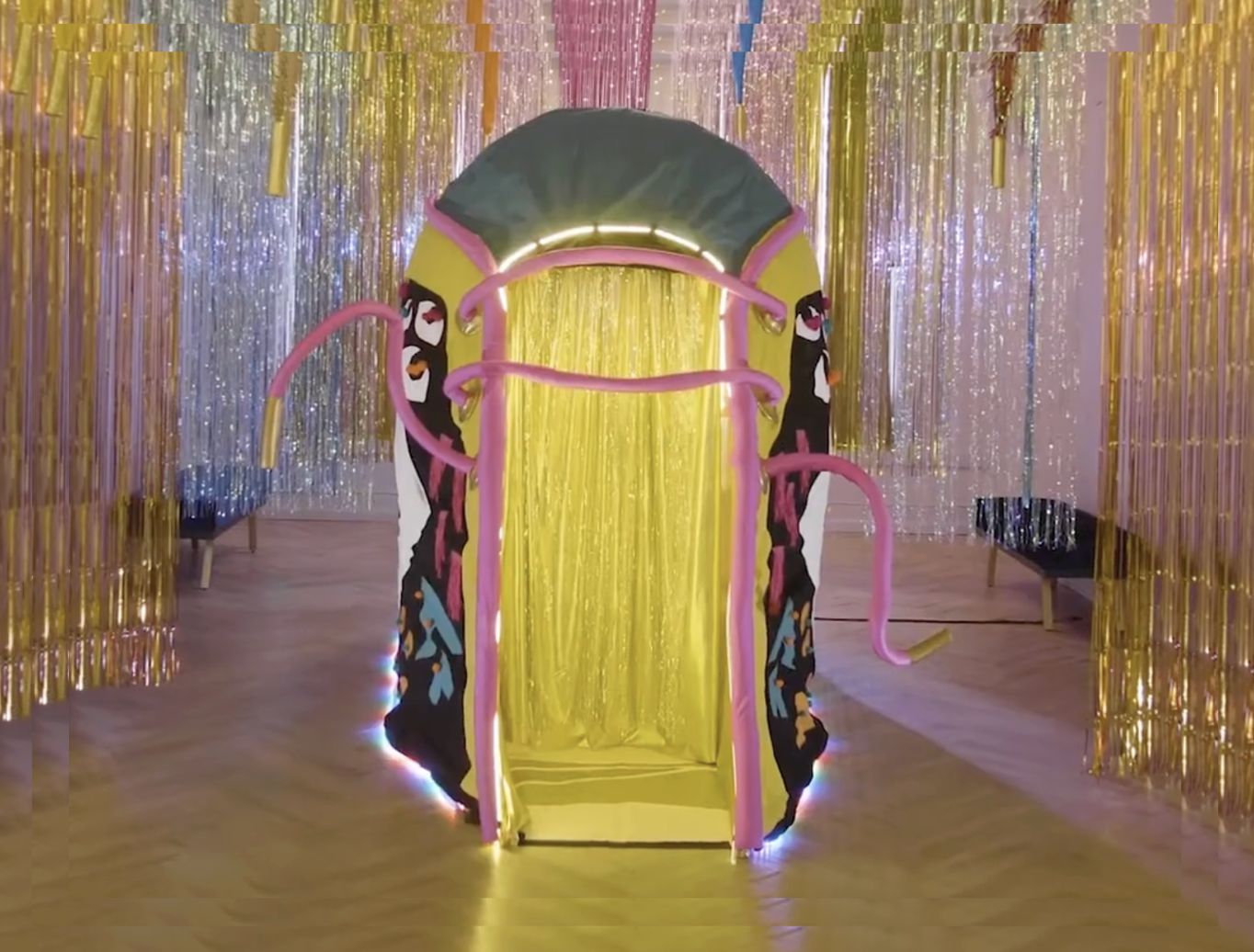
This installation placed a confessional booth inside that space, at one of Microsoft's national headquarters. Anyone could enter. Inside, a figure sat in silhouette, face obscured, presence unmistakable. They were listening. The visitor spoke their truth. The figure drew it. The drawing went up on the wall alongside every other, without rank, without attribution.
What accumulated was a picture of what the people inside an organization actually carry.
-
Interactive Art Installation
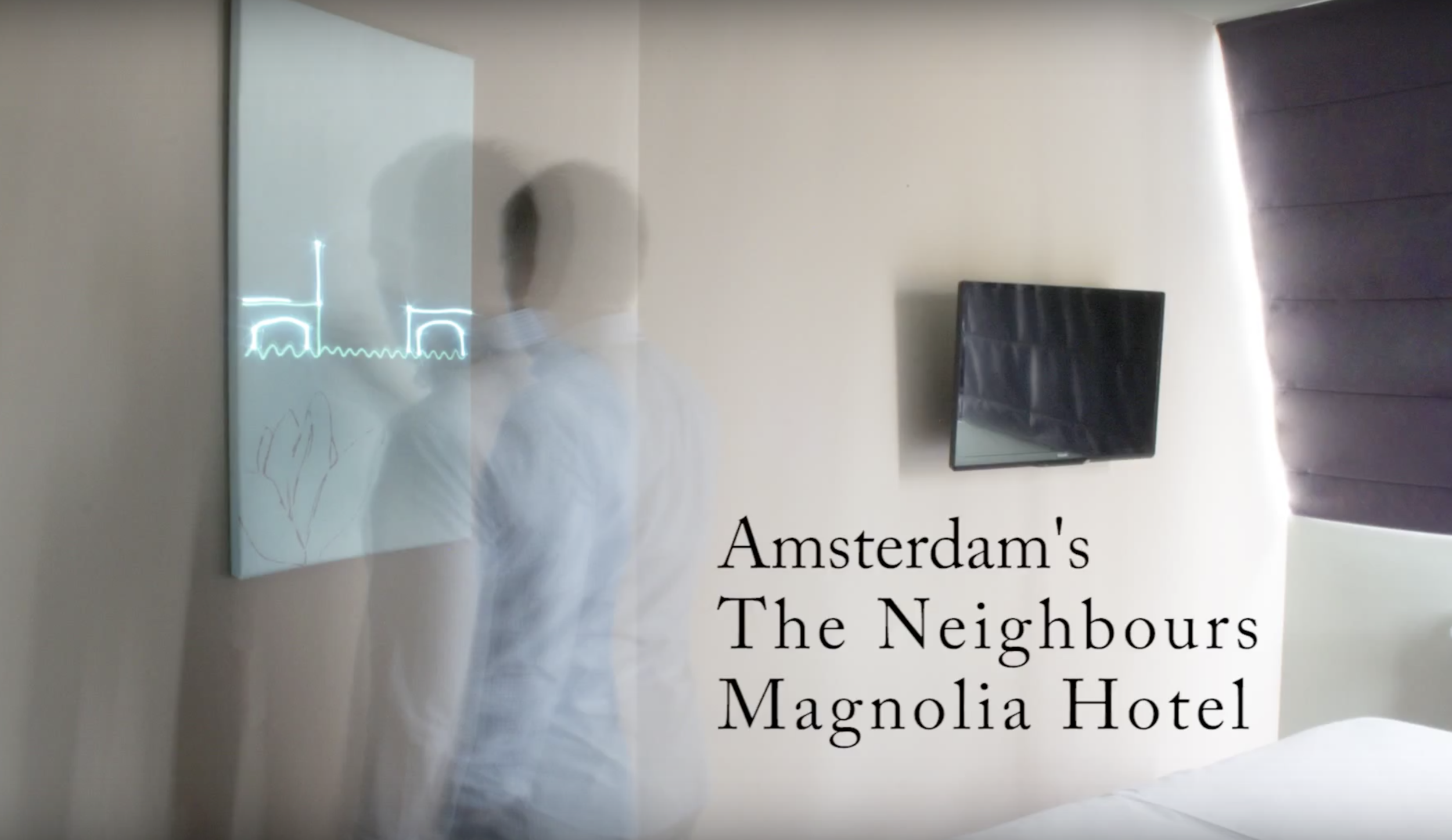
Commissioned for a Dutch Design Hotel, this emotional experience installation brought nighttime feelings into visible form. The interactive light display allowed guests to create and manipulate shapes from the comfort of their beds, transforming private dreams into tangible visual expressions.
One day, I’d love the opportunity to expand this concept to cover an entire high-ceiling lobby, allowing visitors to collectively paint the sky above them—transforming an architectural space into a canvas for collaborative creativity.
-
Environmental and Interior Design
Spaces designed to make people feel genuinely welcomed. Not managed.
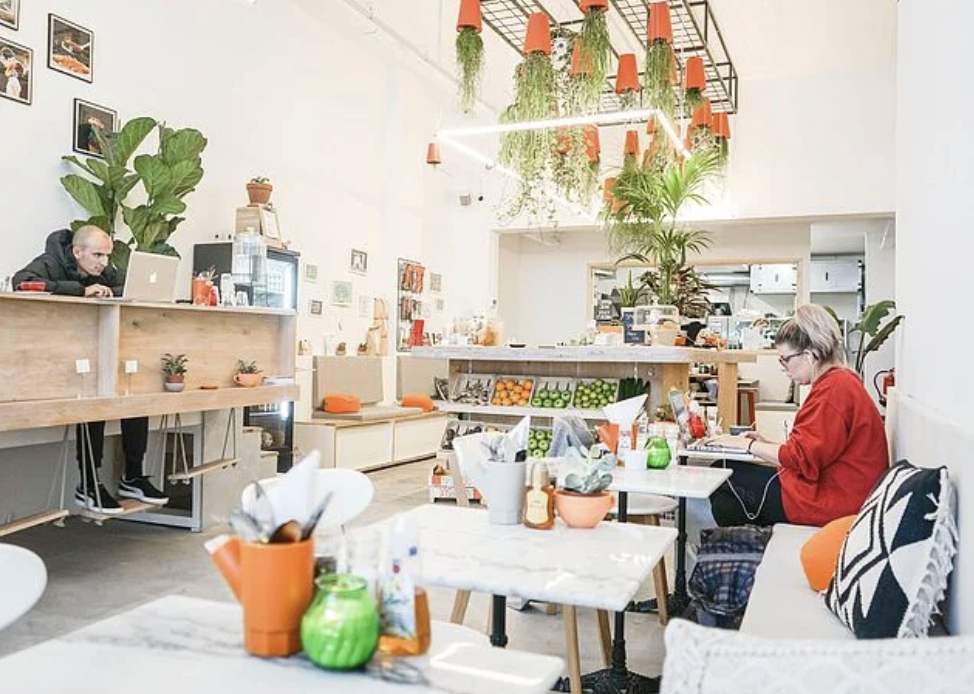
I was commissioned to design the interior of a restaurant in Amsterdam. I brought along my friend and colleague Ashley Scarborough (Interior Design BA, Kingston University; Product Design MA, Royal College of Art) and together we conceived a space organized around a single idea: that where you sit changes everything.
Communal dining tends to think horizontally. Tables spread across a room, side by side, more or less at the same level. We wanted to give it a vertical dimension instead. The kind you find naturally outdoors, where people perch at different heights, each with their own relationship to the canopy above and the ground below.
So we built five tiers. A soft floor beneath a raised platform. Standard tables above that. A bar. A platform from which you could look out over the room. And at the very top, a ladder, leading to a perch above everything. Each level offered a completely different relationship to the space and to the people in it. Intimate at the bottom. Expansive at the top. Plants cascaded from the ceiling throughout.
It was a space that asked you, quietly, where you wanted to be. And gave you five different answers to choose from.
-
A Miniseries Treatment
A few years ago, through a mutual connection, I was given the opportunity to share the walk-in-my-shoes experiences I had been developing with Cindy Holland, former Head of Content at Netflix. Something in what she saw sparked a conversation, and from that conversation came a pitch.
‘SEEN’ was conceived as a miniseries. A story woven through themes of historical identity and ancestral connection, the value of land and what gets erased when it changes hands, the lives of bees, and Seneca Village – the thriving community that predated Central Park and was displaced to make way for it.
Underneath all of it, a question the work has always been asking: how does empathy live inside a story? How does fiction do what experience does?
The treatment and first episode script was developed by myself and screenwriter, Analee Prater along with Cindy’s early guidance and reflects, I think, some of the most urgent ideas of our time. It didn’t go further than this. But the idea remains alive to me, and I wanted to share it.
The full treatment is available here: