-
Participatory Installation
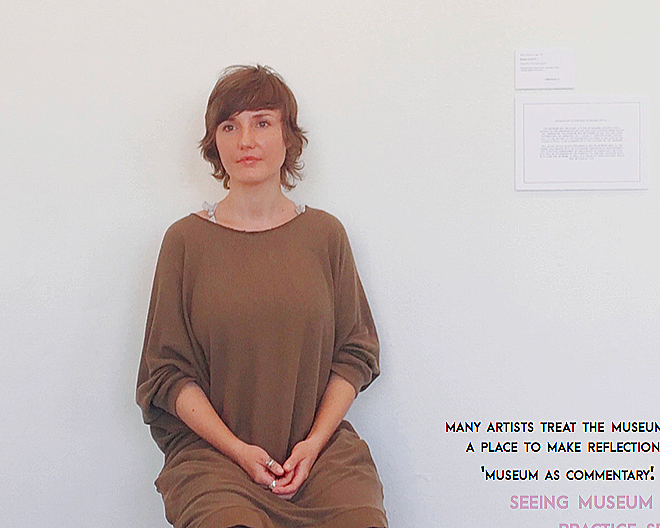
A person sits on a stool. In front of them, a small foam board. It reads: Human Art Experience No. 1.
The visitor approaches. What follows is a conversation. Not a performance, not a demonstration. A conversation between two people, one of whom has agreed to be present in the fullest sense of that word. To want nothing of the visitor. To respond from genuine self-listening rather than social script. To have nothing to teach and nothing to prove.
The visitor will never know exactly what they are receiving, or why it feels different from most human interactions. They will only know that it does.
This is what the work explores: the territory between our real feelings and our official ones. The space that opens when at least one person in an exchange has agreed to stop performing.
To read more about the philosophy of human art, visit Philosophy and Ideas.
-
Experiential Design / Installation
An award-winning studio for live, immersive experiences built around aesthetic rigor and emotional nuance.
Before the work became about empathy, it was about wonder.
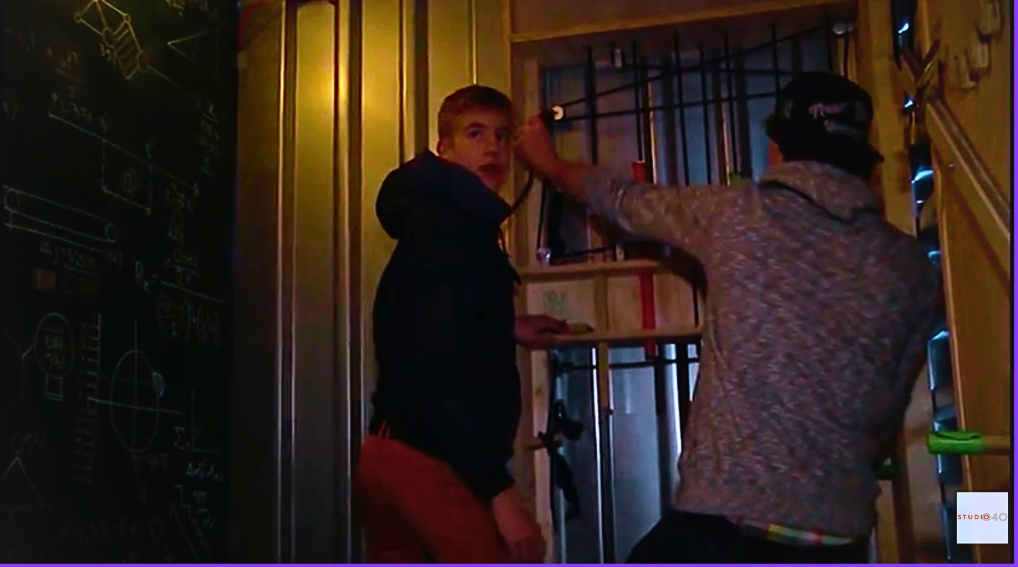
In 2014 I co-founded a boutique experiential design studio in Amsterdam as its artistic director, housed in the historic Beurs van Berlage, the city's former stock exchange. We named it Sherlocked, a name I credit to my younger brother, who was watching the Benedict Cumberbatch series on BBC at the time. We designed four large scale immersive environments, three fully realized, each built around the history of the building and the psychology of known characters, asking participants to think cinematically, to inhabit a familiar perspective and use it to solve what was in front of them.
From a camera system, I observed thousands of groups move through these spaces. People proposed marriage inside them. Strangers became teams. The studio swept every major international escape room award, holds over 1,500 five-star reviews on TripAdvisor, and was featured on De Wereld Draait Door, the Netherlands' most watched talk show, two weeks after opening.
I eventually exited as co-founder to pursue experiences that more deeply intermingled science and human flourishing. I am proud of what we built, and of what it taught me about the unrealized potential of immersive experience at scale.
To read more about that question, visit Philosophy and Ideas.
-
Public Installation
Commissioned for public space, this installation recreated the symptoms of diabetes: balance disruption, concentration difficulties, the sudden physical collapse of a hypoglycemic episode. All through interactions that anyone passing by could enter, without invitation, without preparation.
It was designed to cultivate something more immediate and palpable than what a concept is capable of. A deeper association with the people in your life who have diabetes.
The installation traveled throughout the Netherlands, arriving in town squares of cities large and small. Donations to the Diabetes Fund increased. But just as important, so did the visitors' empathy for their peers, colleagues, friends, spouses, and siblings.

-
Participatory Installation
A designed encounter with the self, held long enough to become real.
A human artwork finds you in the gallery. There is no designated spot for what happens next. They lead you somewhere, by instinct, by their quiet read of you. It might be a corner. It might be near another painting. It might be somewhere you would never have chosen yourself. You make a little conversation on the way. It feels casual. It isn't.
When you arrive, they ask if they can ask you a question. You say yes. They ask: what is love?
You answer. They listen. They thank you, and ask if they can ask you another question. You say yes. What is love? You answer again. This happens five times. Each time the question is the same. Each time something different surfaces. Because the layers of who we are do not all speak at once. They need to be invited, repeatedly, before they begin to reveal themselves.
After the fifth answer, the artwork thanks you once more. They stand with you briefly. Then they tell you they have to go, and they leave. Pleasantly. Without closure, without conclusion.
What remains is the echo. Your own voice, asking itself what it actually knows about love. The answer to the same question, five times over, is never quite the same answer.
The path that brought you here was with someone else. And yet upon reflection, a path of your own agency. That lives in the echo too.

-
Interactive Installation
An exploration of what compassion feels like when it's not performed.
A human artwork stands in the room, arms around themselves. Not as a gesture. As a practice. The self-embrace is the work's resting state, its center of gravity.
The visitor may approach. They may stand before the artwork. At some point, the artwork may release their self-embrace and open it to the visitor. They may not. This depends entirely on where the artwork is within their own experience at that moment. The visitor does not know this. There is nothing to know from the outside.
And as we stand there, we are confronted with how we construct meaning from another person's behavior. With extraordinary conviction. With emotions drawn from everything that has happened to us before this moment. Science has shown us that when not given explicit information, we almost always misread other people's emotional states. And yet the misreading feels certain. It feels like knowledge.
When the embrace opens we feel chosen. When it does not we feel its absence as something that reflects back on us. This is embedded in the architecture of how we move through a world in which other people's intentions are always, to some degree, both asynchronous with our own and falsely assumed.
The artwork's self-containment is not a verdict. It is simply the truth of another person's interior, which remains, as all interiors do, ultimately unknowable.
What the exhibition makes possible is the recognition of that unknowing. And in that recognition, something may quietly open. If not the arms of the artwork, then perhaps your own. Your ability to embrace the entirety of what you are revealing to yourself in that moment. No matter what it is. With unconditional attention.

-
Immersive Experience Design
First-person immersive experiences of lives other than your own.
You press play. A subtitle appears on screen. You're asked to speak it out loud. You do. The people on screen respond to you. Before long you are in a conversation, and the conversation feels familiar, but the person they are responding to is not quite you. It is someone else. Someone whose story you are now walking inside.
A moment where they felt a deep sense of belonging. A moment where their belonging grew thin. Little joys you recognize, and some you don't. Questions you have never thought to ask yourself. Ways of being perceived that have simply never been yours. Experiences you have heard about from the outside, and now, just briefly, find yourself a little closer to.
Connections you have made in your mind disconnect and reshape. They form new ways of looking at the world around you. As your eyes get wider, your ability to care for others gets brighter.
This is the possibility of point of view. Not to shove bias in your face, but to invite you to expand one of the most fundamental liberators of the human mind: a wider range of predictions about what reality can mean. To grow more comfortable with variation. And in doing so, to hold your own reality not more lightly, but more passionately. More fully yours, because you are living it knowing others are living theirs.
This body of work spans over 80 first-person immersive experiences, each built from real moments in real lives. The design is grounded in social science research on perspective-taking, emotion, and the architecture of bias. Organizations including Google, Meta, Deloitte, Harvard Medical School, UVA, and Dartmouth have brought this work to their people. Over 15,000 participants have been through it.
What I have learned from watching that many people step briefly into another life, and listening carefully to what they say when they return, has shaped everything else I make.

-
Participatory Installation
An experiential framework for rebuilding authentic connection inside a large organization.
Coming together to work asks a great deal of us. To signal shared values. To give feedback and receive it. To be direct, but also, often, to shroud our real opinion. To go with the herd when going against it feels unsafe.
And yet underneath all of that, something human is still happening. Genuine human exchange requires people to be able to be honest. To share what they actually see and feel. We are not going to change the structure of organizational life systemically. But we can create a space, briefly, where the deeper truth has somewhere to go.
This installation placed a confessional booth inside that space, at one of Microsoft's national headquarters. Anyone could enter. Inside, a figure sat in silhouette, face obscured, presence unmistakable. They were listening. The visitor spoke their truth. The figure drew it. The drawing went up on the wall alongside every other, without rank, without attribution.
What accumulated was a picture of what the people inside an organization actually carry.

-
Performance Installation / Early Work
This was my first artistic project, made at twenty-three. Looking back, it makes me smile.
I had been reading Vimala Rogers on handwriting and thinking about how letters are, in the end, shapes with a long history. Icelandic runes. Ancient marks. Spells, in the oldest sense of that word, that form the way we think and feel. So I became curious: what if you extracted the emotional residue of a single letter? Asked people what they felt when they saw it, held it, wrote it? And then let that feeling become movement?
We asked hundreds of English speakers to identify their favorite letters from the Roman alphabet and describe the emotions each one carried for them. Patterns emerged. We fed those patterns into an early Microsoft Kinect camera, which translated physical movement into projected language in real time. The poem being spelled out as dancers moved was one I had written around the same time, deliberately simple:
O ow
Oh, wow.
No ow on we now.
Oh, ow.
Oh, wow.
We owe no one now.
Oh, ow.
Oh, wow.
Now we owe no one.
Oh, new we.
We owe no one now.
It worked, decently. And it was genuinely interesting.
The folly, which I can see clearly now, was assuming that emotional associations with letters could be made collective. They are hyperindividualized, shaped by the full weight of a person’s experience, and perhaps by nature too, in ways that are harder to explain. A definitive movement built from a definitive emotion was always going to be more specific than universal.
But the synesthetic pursuit underneath it, the attempt to find a language that moves between letter, feeling, and body, that I still value. It was the beginning of a long inquiry into what gets carried across when meaning moves from one medium to another. And what, inevitably, gets lost.

-
Environmental and Interior Design
Spaces designed to make people feel genuinely welcomed. Not managed.
I was commissioned to design the interior of a restaurant in Amsterdam. I brought along my friend and colleague Ashley Scarborough (Interior Design BA, Kingston University; Product Design MA, Royal College of Art) and together we conceived a space organized around a single idea: that where you sit changes everything.
Communal dining tends to think horizontally. Tables spread across a room, side by side, more or less at the same level. We wanted to give it a vertical dimension instead. The kind you find naturally outdoors, where people perch at different heights, each with their own relationship to the canopy above and the ground below.
So we built five tiers. A soft floor beneath a raised platform. Standard tables above that. A bar. A platform from which you could look out over the room. And at the very top, a ladder, leading to a perch above everything. Each level offered a completely different relationship to the space and to the people in it. Intimate at the bottom. Expansive at the top. Plants cascaded from the ceiling throughout.
It was a space that asked you, quietly, where you wanted to be. And gave you five different answers to choose from.
-
Participatory Installation
A collection of people stand against the wall. Beside each one, a small card. On the card, a name. Martha Rothko. Willem de Kooning. Agnes Martin.
They were not chosen for their resemblance to these artists. They were chosen because something in them, something not easily named, resonates with something in the work. They are not dressed in the colors of the canvases. They do not perform the biography. They simply stand. Present. Themselves.
Occasionally, one of them might say something. A word. A fragment. Quiet, and not necessarily addressed to anyone. Not meant to be understood in any particular way. They go beyond ownership the way that art goes beyond ownership. More so, perhaps, because they truly cannot be owned.
What the names do is stop us. We have learned to stop in front of a Rothko. To give it time. To look without agenda, with something approaching reverence. That quality of attention is something we rarely offer a stranger. It feels voyeuristic. Invasive. Or simply, the world is too busy.
Here, it is offered back. The name creates the permission. And in that permission, something opens: the possibility of looking at another person the way we have learned to look at art. With patience. With genuine curiosity. With the quiet understanding that what is in front of us is a world. And that world, like all worlds, cannot be fully known.